
Good Girl Gone Bad
Play Good Girl Gone Bad
Good Girl Gone Bad Screenshots














Good Girl Gone Bad review
Explore the immersive adult visual novel ‘Good Girl Gone Bad’ and its unique narrative choices
Good Girl Gone Bad is an adult life simulation visual novel that offers players a complex, branching story centered around Ashley, a character navigating a world full of choices and consequences. This game stands out for its hand-drawn art, deep character development, and freedom to explore different narrative paths. Whether you’re new to the game or looking to deepen your understanding, this article covers everything from gameplay mechanics to character arcs, helping you make the most of your experience with Good Girl Gone Bad.
Understanding Good Girl Gone Bad: Gameplay and Story Overview
Have you ever felt that familiar itch? That urge to peek behind the curtain of a “perfect” life and see what unravels when you pull a single thread? 😈 That’s the exact feeling Good Girl Gone Bad captures and turns into an interactive masterpiece. This isn’t just another adult visual novel; it’s a fascinating exploration of identity, temptation, and consequence, wrapped in a deceptively simple point-and-click package.
Forget passive storytelling. Here, you are handed the pen. Every click, every dialogue option, is a stroke that defines the portrait of Ashley, the protagonist. Will she stay on her straight-and-narrow path, or will she explore the wild, chaotic, and thrilling alternatives that life suddenly offers? The beauty is, there’s no right answer—only your answer.
### What is Good Girl Gone Bad? An Introduction to the Game
At its heart, the Good Girl Gone Bad game is an intimate life simulation. You step into the shoes of Ashley, a young woman whose life seems comfortably mapped out: a stable relationship, clear career goals, and predictable routines. But comfort can quickly turn to confinement. 👗
The game excels at presenting a relatable crossroads. Through a series of seemingly small decisions—what to wear, who to talk to, whether to indulge a risky thought—you begin to steer Ashley’s life in dramatically different directions. The core adult visual novel gameplay isn’t about shock value; it’s about authenticity. It explores mature themes of desire, rebellion, friendship, and self-discovery with a surprising amount of depth and nuance. The “adult” label signifies its willingness to go where many stories won’t, portraying a full spectrum of human experience without flinching.
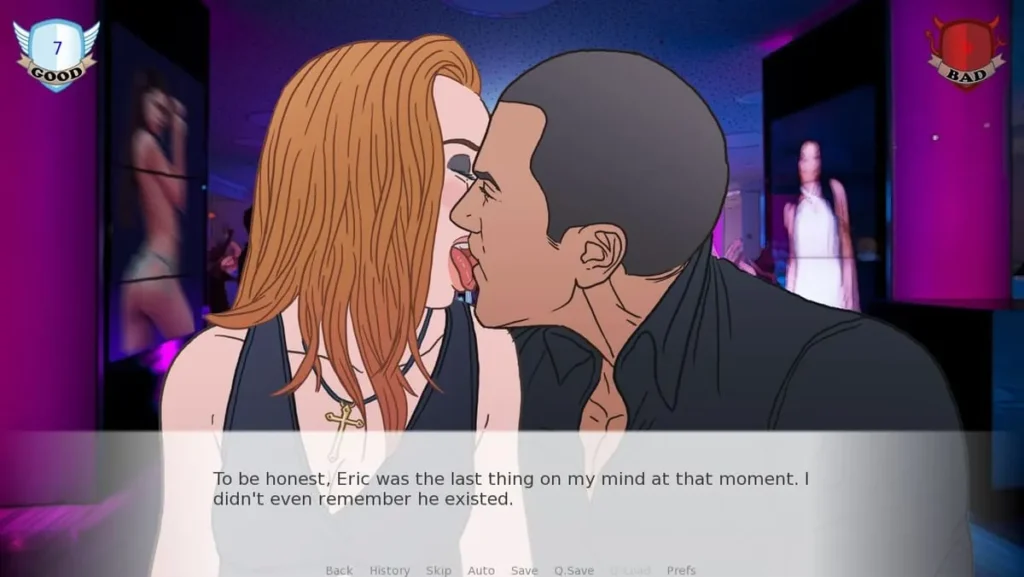
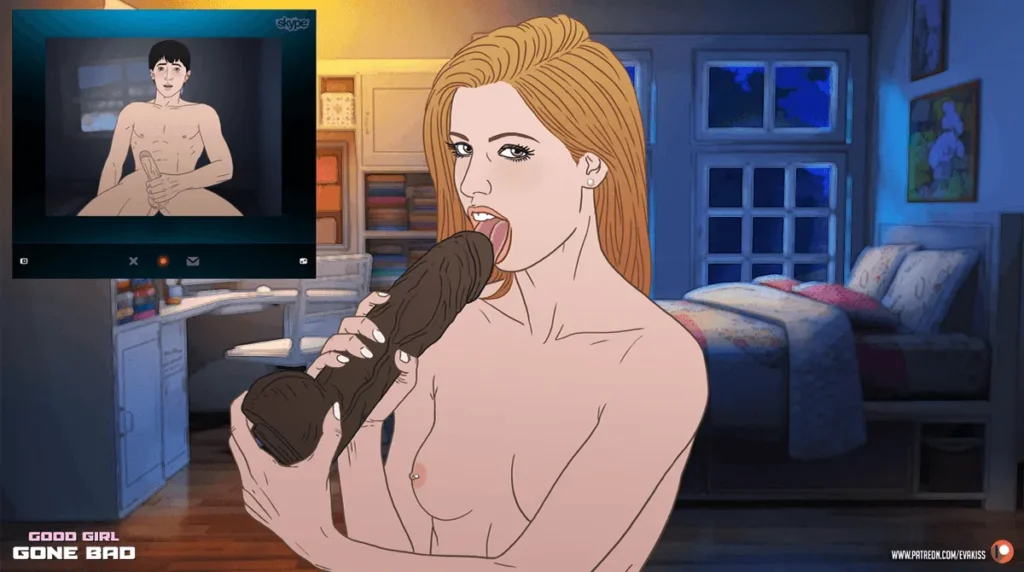
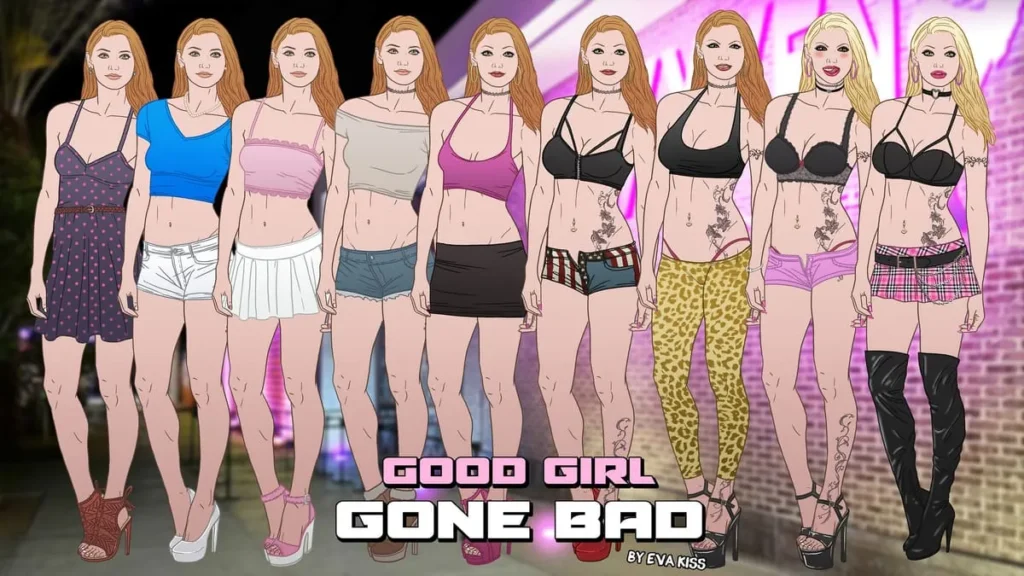
What truly sets the stage is its stunning hand-drawn art visual novel style. Every character, every location, feels unique and alive. The art isn’t just decoration; it’s a crucial narrative tool. A subtle shift in a character’s expression or a change in Ashley’s wardrobe speaks volumes, pulling you deeper into her evolving world. This visual charm makes every scene immersive, whether it’s a tense family dinner or a clandestine meeting.
### Key Gameplay Mechanics and Player Choices
The genius of this Good Girl Gone Bad game lies in its elegant simplicity. You navigate through a series of scenes, making choices via clear dialogue and action menus. But don’t let the straightforward interface fool you. This is where the life simulation game mechanics work their magic.
Your Good Girl Gone Bad choices are everything. They aren’t just binary “good vs. evil” picks. Instead, they feel like genuine life decisions: Do you study for your exam or go out with the new, exciting friend? Do you confess a secret to your boyfriend or keep it hidden to maintain peace? Each choice influences Ashley’s stats—like her Confidence, Corruption, Relationship meters, and Reputation—which in turn unlock or lock future story branches.
I remember one playthrough where I decided Ashley should stand up to her overbearing boss just once. It was a small moment of asserting confidence. That single choice didn’t just change that scene; it opened up an entirely new storyline hours later where a coworker, having heard about her boldness, approached her with a risky business proposition. The butterfly effect is real here.
To break it down, here are the primary levers you pull as a player:
| Core Mechanic | How It Works | Impact on Story |
|---|---|---|
| Dialogue & Action Choices | Select responses in conversations or decide on specific actions during key scenes. | Directly shapes relationships, opens new plot threads, and alters character perceptions of Ashley. |
| Character Stat System | Hidden metrics (e.g., Confidence, Reputation) change based on your decisions. | Stats act as gates; certain story paths require a minimum (or maximum) level in a specific stat to become available. |
| Relationship Management | Building (or burning) bridges with a cast of diverse characters including friends, family, love interests, and rivals. | Determines who supports Ashley, who becomes an adversary, and which romantic or platonic arcs you experience. |
| Exploration & Replayability | The game encourages multiple saves and revisiting pivotal chapters to make different choices. | Unlocks the vast majority of the game’s content, as a single playthrough will only reveal a fraction of the possible story. |
This framework creates a powerful sense of agency. You’re not watching a story about rebellion; you are engineering it, one deliberate or impulsive decision at a time.
### Exploring the Narrative: Branching Paths and Endings
This is where the Good Girl Gone Bad game truly shines. The narrative isn’t a single road with occasional detours; it’s an intricate web of interconnected possibilities. Those branching storylines Good Girl Gone Bad is famous for mean that the story you get is uniquely yours.
The game masterfully weaves together multiple plot threads—Ashley’s career, her romantic life, her family dynamics, and her personal exploration. A choice in one area will ripple into others. Focusing solely on a wild party lifestyle might advance one storyline but cause your academic or relationship threads to wither and close off. 🎭
The culmination of all this is the brilliant array of Good Girl Gone Bad endings. There’s no single “canon” conclusion. Your ending is a direct reflection of the Ashley you’ve crafted. Does she find empowerment in her independence? Does she reconcile with her past and choose stability? Or does she embrace a hedonistic freedom without looking back? I’ve guided her to endings that felt triumphant, others that were melancholic, and a few that were downright chaotic—all of them feeling earned based on my journey.
My Pro Tip: Don’t try to see “everything” in one go. The magic is in the specialization. Commit to a personality for Ashley in each playthrough. Be the dutiful girlfriend in one, the ambitious careerist in another, and the fearless explorer in a third. You’ll be amazed at how different the same starting chapters can feel.
To fully appreciate the scope of Good Girl Gone Bad choices, you must play it more than once. The first playthrough is your gut reaction. The second, third, and fourth are where you discover the hidden layers, the alternative perspectives, and the characters you never met before. This adult visual novel gameplay loop of choice, consequence, and discovery is incredibly compelling.
Ultimately, Good Girl Gone Bad is a game about freedom. The freedom to experiment, to fail, to succeed on your own terms, and to tell a story that resonates with your own curiosities. Its hand-drawn art visual novel aesthetic makes it beautiful to look at, while its deep life simulation game mechanics and profound respect for Good Girl Gone Bad choices make it endlessly fascinating to play. Whether you’re seeking a compelling narrative experience or a sandbox for personal storytelling, this game offers a uniquely immersive journey into the complexities of turning a page and writing a new chapter for yourself.
Good Girl Gone Bad offers a richly detailed and interactive experience that invites players to explore a variety of narrative paths through meaningful choices. Its combination of hand-crafted visuals and deep character development makes it a standout in the adult visual novel genre. Whether you prefer to follow a single storyline or experiment with different decisions, this game provides ample opportunity for immersive storytelling. Dive in, make your choices, and discover the many facets of Ashley’s journey.