
Healslut
Play Healslut
Healslut Screenshots






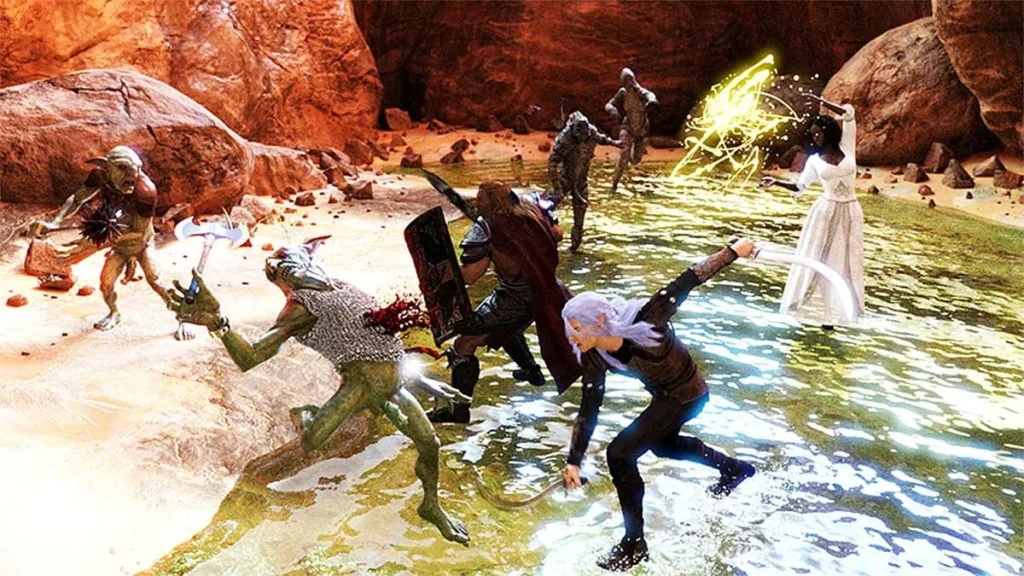

Healslut review
Master the unique blend of strategy, roleplay, and adult gaming in this immersive fantasy experience
Healslut represents a distinctive fusion of interactive storytelling and strategic gameplay that sets it apart in the adult gaming landscape. Developed by Davie Zwei, this Ren’Py visual novel combines MMO-inspired mechanics with dynamic relationship systems and meaningful player choices. Whether you’re drawn to the intricate character customization, the branching narrative paths, or the strategic depth of resource management, Healslut offers a richly layered experience. This comprehensive guide explores the core mechanics, gameplay features, and strategic approaches that make this title compelling for players seeking both narrative depth and engaging gameplay loops.
Core Gameplay Mechanics & How They Work
Forget everything you think you know about healing in fantasy games. In Healslut, you’re not just a passive health dispenser waiting for your tank to take damage. You are the strategic heartbeat of your party, a master of morale, resources, and intricate social dynamics. Your every choice—from the spell you cast to the word you whisper—ripples outwards, changing your companion’s performance, your relationship, and the very story you’re telling. This guide will break down the core Healslut gameplay mechanics that make this experience so uniquely engaging. Think of it as part tactical sim, part interactive relationship drama, where your skill in managing people is just as critical as your skill in managing mana.
Let’s dive into the systems that make this world tick. 🧭
Understanding the Healing System & Resource Management
At its heart, Healslut is about a loop of care and consequence. Your primary tools are your healing abilities, but using them isn’t as simple as clicking a button. This is where true healing system strategy begins.
You have two primary resources to manage: Vitality and Focus.
- Vitality is your raw magical energy. It fuels your powerful healing spells and restorative abilities. Drain it recklessly, and you’ll be left defenseless, unable to mend even a scratch.
- Focus represents your mental and emotional clarity. It’s used for tactical abilities, calming a frantic companion, or delivering a particularly inspiring (or distracting) word. If your Focus dips too low, your spells become less effective, and your dialogue options narrow—you’re too frazzled to think straight.
Here’s the strategic twist: your healing doesn’t just refill a health bar. It directly impacts your partner’s Combat Mood. A well-timed, potent heal when they’re under pressure can shift their mood to Inspired or Fervent, granting them damage buffs or faster attack speed. A clumsy, inefficient heal when they’re already annoyed might drop their mood to Irritated or Distracted, causing them to miss attacks or draw unnecessary enemy attention.
This creates a brilliant feedback loop. Do you spend a large chunk of Vitality on a big heal to quickly boost their mood and performance? Or do you use smaller, more efficient heals over time, conserving Vitality but risking their mood dropping during a sustained fight? This constant, meaningful decision-making is the essence of resource management Healslut style.
I learned this the hard way during an early boss fight. I was spamming my most powerful heal, burning through Vitality, thinking I was doing great. But because I was ignoring my Focus and never using any calming or tactical skills, my companion became Overconfident. They started recklessly pulling extra enemies, and when my Vitality ran dry, we were completely overwhelmed. The game was telling me: healing is more than numbers; it’s about psychological management.
To visualize how these mechanics transform a familiar role, let’s look at this comparison:
| Mechanic | Traditional Healing Gameplay | Healslut’s Adult-Oriented Approach |
|---|---|---|
| Cooldown Management | Managing timers on spells like “Greater Heal” or “Renew.” | Managing your partner’s stamina and attention span. A “cooldown” might be their need for a brief respite or encouragement before accepting another intensive buff. |
| Party Buffs | Cast “Blessing of Might” for +10% damage. | Use dialogue or skillful action to induce a *Fervent* mood, which unlocks unique, context-sensitive combat bonuses based on your relationship. |
| Gear Progression | Upgrade staff for +15 Healing Power. | Acquire accessories or garments that improve your **Vitality** efficiency or unlock new, more intimate ways to administer care, which in turn affect Focus regeneration. |
Mastering this loop—balancing Vitality, Focus, and Combat Mood—is your first step to becoming an adept player. It turns every encounter into a dynamic puzzle. 🧩⚖️
Relationship Dynamics & Consequence-Driven Choices
If the healing loop is the game’s beating heart, the relationship dynamics game is its soul. This isn’t a simple “like/dislike” meter. Your companion is a fully realized character with memories, preferences, and moods that change based on your actions both in and out of combat.
Every interaction is a building block. The dialogue choices consequences are far-reaching and often hidden. You might have four options to respond to a companion’s complaint about a difficult journey:
1. “Your strength will see us through.” (Stoic/Encouraging)
2. “I know it’s hard. Let me ease your pain.” (Empathic/Caring)
3. “Stop whining and keep your guard up.” (Harsh/Dominant)
4. Say nothing, but gently adjust their armor with a knowing smile. (Non-verbal/Playful)
Each choice aligns with different moral or personality alignments (Saintly, Mischievous, Nurturing, Authoritative) and sends a subtle signal. The immediate consequence might be a small mood shift, but the narrative consequence could be profound.
Let me share a personal example: In a mid-game quest, my companion was suspicious of a charming noble. In dialogue, I chose a Mischievous option, suggesting we play along with the noble’s games to get better rewards. My companion agreed, but with a note of reluctance. Later, that noble betrayed us. Because I had encouraged the playful deception earlier, my companion’s trust in my judgment was shaken. For the next several quests, they would second-guess my tactical suggestions in combat, and a unique, frosty dialogue branch opened up where we had to resolve the underlying issue of trust. One choice, three acts prior, had fundamentally altered our dynamic and the gameplay options available to me. This is the power of dialogue choices consequences.
Characters react authentically. They remember your promises, your kindnesses, and your betrayals. A companion in a Resentful mood from a previous story argument might refuse your most powerful, Focus-costly buffs, forcing you to adapt your entire healing system strategy for that dungeon run. Alternatively, a deep bond of trust might unlock “Synchronized” abilities, where your combined Focus and Vitality can unleash spectacular dual attacks.
This system creates relationship-based puzzles. You might need to deliberately put your partner in a specific emotional state through a series of dialogue and action choices to unlock a door sealed by magic that responds to a particular mood. The game brilliantly ties your social mastery directly to progression. 🤝💡
Character Progression & Skill Customization
Your journey is shaped by your personal touch, thanks to deep character customization options and a dynamic skill tree progression. From the outset, you define not just your appearance, but your core approach through a moral alignment choice. Are you a Saintly Healer, whose purity makes your Vitality spells more efficient? Or a Mischievous Aide, whose playful antics generate bonus Focus? This initial choice flavors your starting abilities and opens certain early dialogue paths.
The real meat of your build comes from the dynamic skill trees. These aren’t just linear upgrades. They are branching pathways that reflect how you choose to interact with your world and your companion.
- The Heartwarden Tree: Focuses on raw healing potency, Vitality conservation, and protective auras. Specializing here makes you a resilient bastion of support.
- The Tempter’s Tree: Centers on Focus generation, mood manipulation, and debuffing enemies by distracting them. This is for players who love the psychological aspect of the relationship dynamics game.
- The Bondweaver Tree: Unlocks synchronized abilities and skills that share resources between you and your companion. It turns the pair of you into a truly unified team.
Here’s the genius part: your skill tree progression directly influences narrative progression. Investing heavily in the Tempter’s tree might unlock persuasion options to talk your way out of fights, leading to entirely different story branches. Early on, the game teaches you the basics through simple missions: heal this wound, calm this nerve, choose a dialogue response. But late-game content introduces morality locks—special doors or story events that can only be accessed if your alignment (Saintly/Mischievous/etc.) is at a certain level, which is built through consistent choice-making.
Finally, let’s talk about the daily grind: the energy management system. Your character isn’t a machine. Between adventures, you have personal time at your quarters. You can spend this energy on:
* Crafting potions (improves Vitality efficiency for the next day).
* Practicing charms (improves Focus recovery).
* Reflecting on your bond (can slowly repair relationship strains or deepen connections).
* Pursuing personal quests (unlocks new customization options or backstory).
This system forces you to balance your role as a healer with your own personal goals and well-being. Do you spend your evening energy making potions for tomorrow’s dangerous raid, or do you write a letter to mend a rift with your companion? This choice is the final layer of resource management Healslut demands, making you consider the cost of your dedication.
Mastering Healslut isn’t about finding one perfect build. It’s about understanding how your chosen character customization options, your evolving skill tree progression, and the cascading dialogue choices consequences all weave together. Your healer is a unique creation, and your story is one of intricate strategy, deep connection, and personal discovery, where every resource managed and every word spoken writes an unforgettable tale. 🌟📖
Healslut stands out as a thoughtfully designed experience that respects player agency while delivering meaningful consequences for every choice. The game’s strength lies in its integration of strategic gameplay with narrative depth—you’re not simply clicking through scenes, but actively shaping relationships, managing resources, and navigating complex social dynamics. Whether you’re drawn to the intricate character customization, the multiple game modes offering distinct experiences, or the branching narratives that reward exploration and experimentation, Healslut provides substantial replay value. The combination of dynamic skill trees, relationship mechanics, and consequence-driven storytelling creates an engaging loop that keeps players invested across multiple playthroughs. For those seeking an adult-oriented game that doesn’t sacrifice gameplay depth or meaningful player choice, Healslut delivers a compelling and immersive experience worth exploring.